Flat Feet in Kids: Why Woodland Hills Parents Should See a Local Podiatrist Early
- Apr 20
- 5 min read
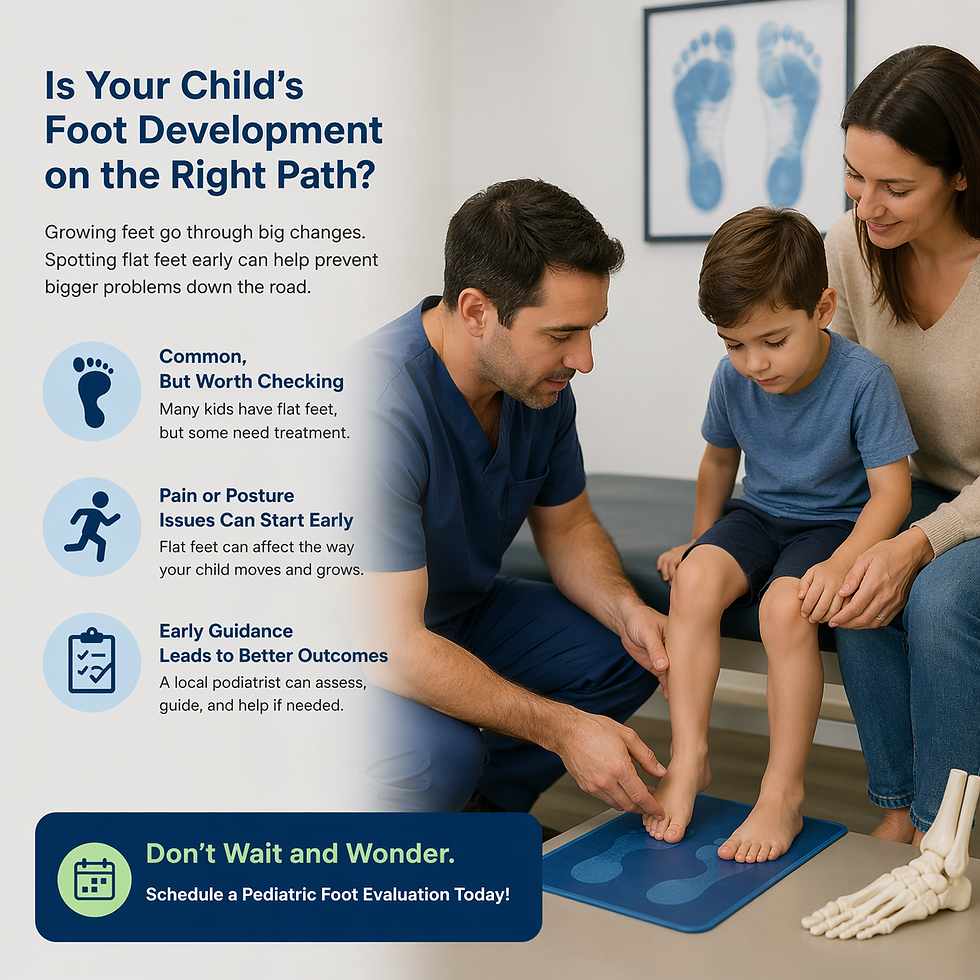
Many parents notice their child walking a little differently but assume it is just part of growing up. However, flat feet in children are one of the most common foot conditions that, when left unaddressed, can lead to discomfort, poor posture, and movement challenges later in life. Visiting a podiatrist in Woodland Hills families trust can make a real difference when caught at the right developmental stage. Early professional evaluation gives your child the best foundation, both literally and figuratively, for healthy and active years ahead.
What Are Flat Feet and How Do They Develop in Children?
Flat feet, medically known as pes planus, occur when the arch of the foot does not rise off the ground as it normally should. In infants and toddlers, having flat feet is completely normal because the arch forms gradually as ligaments and tendons strengthen with age. Most children develop a visible arch by the time they reach six to eight years old.
However, some children carry flat feet beyond this window, either due to genetics, joint hypermobility, obesity, or underlying muscle conditions. Flexible flat feet, where the arch appears when the child stands on tiptoe but disappears when they stand flat, are different from rigid flat feet, which may indicate a more structural concern. Knowing which type your child has is where professional pediatric foot care becomes essential.
Why Do Parents Often Wait Too Long?
A common reason parents delay care is that flat feet often do not look painful. Children rarely complain directly about foot pain. Instead, they may say their legs are tired after short walks, refuse to participate in physical activities they once enjoyed, or trip and fall more than their peers. These indirect signs are easy to overlook or misattribute to other causes.
Well-meaning relatives also tell some parents that their child will simply grow out of it. While this is sometimes true, waiting without professional input can mean missing a critical window where simple, non-invasive interventions are most effective. Arch support insoles, specific stretching routines, and targeted physical therapy exercises work best when introduced during active growth phases.
Signs That Your Child May Need a Pediatric Foot Specialist
Frequent complaints of foot, ankle, knee, or lower back pain, especially after physical activity
Visible inward rolling of the ankles, also called overpronation, when standing or walking
Shoes that wear out unevenly or faster than expected on the inner sole
Clumsiness, difficulty running, or reluctance to join playground activities
Leg cramps or growing pains concentrated in the arch or heel area
Postural changes, such as one hip sitting lower than the other or knees turning inward
If your child shows two or more of these signs consistently, scheduling a foot health evaluation sooner rather than later is a wise step.
How Does a Foot Specialist Evaluate a Child's Arch?
A qualified foot specialist will begin with a thorough visual and physical assessment of how your child stands, walks, and moves. They may ask your child to perform simple tasks, such as walking in a straight line, standing on tiptoes, or picking up small objects with their feet. Gait analysis, which examines the movement patterns of the entire lower body, helps identify compensations your child may be making without realizing it.
In some cases, X-rays or pressure-mapping technology may be used to understand the foot's structure better. This detailed approach ensures that any treatment plan is tailored specifically to your child's anatomy and lifestyle rather than a one-size-fits-all recommendation.
What Treatment Options Are Available for Children With Flat Feet?
The good news is that most cases of pediatric flat feet are highly manageable without surgery. A podiatrist in Woodland Hills who parents rely on for children typically starts with the most conservative options first. These include:
Custom orthotic insoles: Designed from a mold of your child's foot, these fit inside regular shoes and provide targeted arch support, improving alignment from the ground up.
Supportive footwear guidance: Parents are often surprised by how much the right shoe type can alter foot function during daily activities.
Stretching and strengthening exercises: Targeted routines for the calf, arch, and ankle muscles can help the foot develop better structure over time.
Physical therapy: For children with more significant gait abnormalities, working with a physical therapist alongside a foot specialist yields faster, more lasting results.
Activity modification: Temporarily adjusting the type and duration of physical activities helps reduce strain and speed recovery.
Surgery is rarely considered for children unless a rigid structural abnormality is confirmed and does not respond to years of conservative care. The earlier treatment begins, the less likely surgical options ever need to enter the conversation.
Why Local Care in Woodland Hills Makes a Difference?
Consistency matters enormously in pediatric foot care. Children need follow-up visits at key developmental checkpoints, and orthotics often need adjustments as the foot grows. Choosing care close to home reduces the friction of scheduling appointments and helps keep your child on track through each phase of treatment.
Local foot health providers also understand the specific activity demands of kids in the area, whether that involves youth soccer leagues, school physical education programs, hiking trails, or after-school sports. This context shapes more practical and realistic treatment advice that families can actually follow through on.
When Is the Best Time to Bring a Child In for a Foot Assessment?
There is no single magic age, but if you notice any of the warning signs mentioned above before your child turns ten, acting promptly gives the most treatment flexibility. The bones of the foot are still largely cartilage during early childhood and continue to harden through the teenage years. Interventions during this window of active development tend to produce better structural outcomes.
Even teenagers with flat feet benefit from professional care, as orthotics and targeted therapy can still reduce pain, improve athletic performance, and prevent long-term joint damage in the knees and hips. It is never truly too late to address foot alignment, but earlier visits simply keep more options on the table.
How Do Flat Feet Affect Posture and Overall Development?
The feet are the foundation of the entire musculoskeletal system. When the arch collapses consistently, it creates a chain reaction that travels upward through the ankles, knees, hips, and spine. Children with untreated flat feet sometimes develop knee pain from excessive inward rotation, hip discomfort from altered gait mechanics, and even lower back tension from compensating posture patterns.
These secondary issues can affect a child's willingness to stay active, their confidence in physical settings, and their overall quality of movement as they grow. Addressing flat feet early is not just about the foot itself. It is about maintaining the body's alignment throughout the most formative years of physical development.
What Should Parents Look for When Choosing a Children's Foot Care Provider?
Experience working specifically with pediatric patients and developmental foot conditions
Access to modern diagnostic tools, including gait analysis and custom orthotic fabrication
A conservative, patient-centered approach that prioritizes non-invasive treatments first
Clear communication with parents about the treatment timeline and what progress should look like
Convenient location that makes consistent follow-up appointments realistic for busy families
Your child's comfort and confidence in movement are worth addressing now, not later. Flat feet in kids respond best to early, consistent care provided by someone who understands pediatric foot development. Connecting with a trusted podiatrist in Woodland Hills that families have relied on can start your child on a path toward stronger arches, better posture, and pain-free activity. Take that first step today and book a developmental foot assessment for your child before the next growth spurt changes the picture entirely.


Comments