Toenail Fungus Treatment Palmdale: Non-Surgical Treatment Options Explained
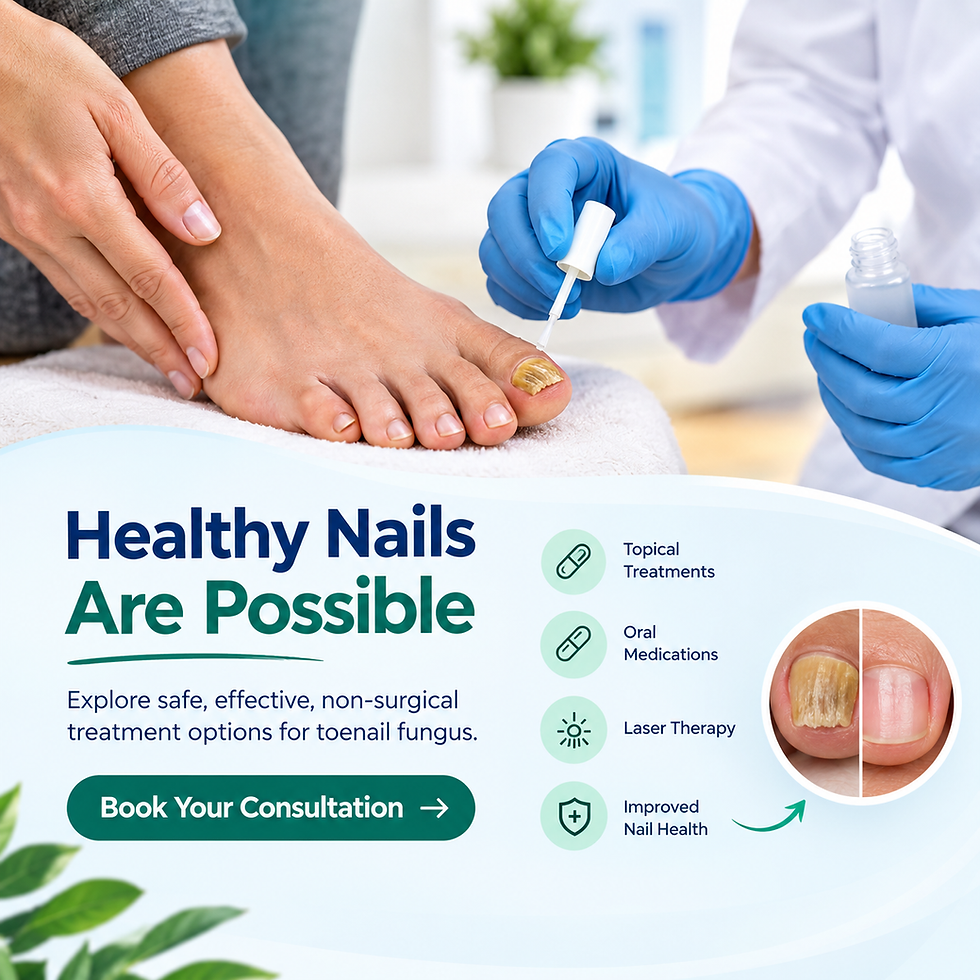
Most cases of nail discoloration, thickening, and mild pain respond well to non-surgical care. Toenail Fungus Treatment Palmdale providers typically start with topical or oral antifungal medication and, when needed, laser sessions. At the same time, an Ingrown Toenail Palmdale case is usually managed with padding, proper trimming technique, or a partial nail lift rather than a scalpel. An Ingrown Toenail Treatment Palmdale clinic will first examine the nail bed to determine whether the issue is fungal, mechanical, or both before recommending a plan, since mixing up the two conditions often delays real relief.
Key Takeaways
Yellow, brittle, or thickened nails are usually fungal, while redness and swelling along the nail edge point to an ingrown nail.
Topical antifungal lacquer works for surface-level infections; oral antifungal medication reaches deeper nail layers.
Laser therapy is a common non-surgical add-on when topical treatment alone hasn't cleared the infection.
Ingrown nails caught early rarely require cutting; padding, gutter splinting, and trimming adjustments often resolve them.
A podiatrist's evaluation prevents wasted time on the wrong treatment path.
Nail problems rarely show up as a single, obvious issue. A patient might notice a toenail fungus patch spreading across one nail while a completely separate toe develops a sore, inflamed edge from an ingrown toenail. Both are common in Palmdale's warm, dry climate, especially when combined with closed athletic shoes, and both respond to conservative management long before surgery ever enters the conversation.
What Fungal Nails Actually Look Like?
Nail fungus, medically referred to as onychomycosis, tends to develop slowly. Early signs include:
A white or yellow spot under the nail tip
Gradual thickening of the nail plate
Crumbling edges or a chalky texture
A faint, musty odor in socks or shoes
Because these changes creep in over months, many people assume it's cosmetic damage from a stubbed toe rather than an active fungal infection. Left untreated, the infection typically spreads to neighboring nails and can make trimming difficult or painful.
When an Ingrown Nail Needs Attention?
An ingrown toenail develops when the nail edge curves and presses into the surrounding skin, usually on the big toe. Warning signs include:
Redness or swelling along one side of the nail
Tenderness when wearing closed shoes
Fluid or slight drainage if the skin has broken
A visible edge of nail digging into the skin fold
Trimming nails straight across, avoiding overly tight shoes, and treating minor irritation promptly can prevent most cases from progressing to infection.
Non-Surgical Paths for Ingrown Toenail Treatment
For an ingrown toenail treatment in Palmdale, a foot care specialist generally starts with the least invasive option available. Common approaches include:
Gutter splinting, where a small tube is slid under the ingrown edge to guide it away from the skin as it grows
Cotton wedging or padding to lift the nail corner temporarily
Soaking protocols paired with topical antiseptic care to reduce swelling
A brief partial nail lift performed in-office when the edge is deeply embedded but not chronically recurring
Surgical removal of the nail border is typically reserved for cases that keep returning despite these conservative steps, not the default first move.
Antifungal Options Worth Understanding
Toenail Fungus Treatment protocols vary based on how deep the infection sits within the nail plate:
Topical antifungal lacquer applied directly to the nail, best for infections limited to the surface
Oral antifungal medication, which travels through the bloodstream to treat infection from the nail root outward
Laser therapy, a heat-based option that targets fungal cells without medication side effects
Debridement, where a specialist thins the thickened nail so topical treatment can actually penetrate
Pricing and treatment length depend on how many nails are affected and how long the infection has been present, so an accurate evaluation matters more than picking a treatment off a list.
What a Palmdale Evaluation Actually Involves?
A qualified podiatrist doesn't guess based on appearance alone. A visit for an ingrown toenail in Palmdale or fungal concerns typically includes a visual exam, a review of footwear and activity habits, and sometimes a nail clipping sent for lab confirmation. This step distinguishes true onychomycosis from nail trauma or psoriasis, which can mimic fungal symptoms but require an entirely different approach. Community-based practices familiar with local climate, dust exposure, and common footwear patterns among Palmdale residents tend to catch these distinctions faster than a generic online recommendation ever could.
Everyday Habits That Support Treatment
Alongside professional care, a few habits noticeably speed up nail recovery:
Keeping feet dry, especially after workouts or desert-heat days
Rotating shoes so moisture fully evaporates between wears
Trimming nails straight across rather than rounding the corners
Disinfecting nail clippers regularly to avoid reinfection
None of these replace clinical treatment, but they meaningfully reduce recurrence once a nail has started to clear.
Frequently Asked Questions
How long does toenail fungus treatment usually take to show results?
Visible improvement often takes several months since a healthy nail has to grow out fully, though topical and laser combinations tend to show progress faster than topical treatment alone.
Is an ingrown toenail treatment painful?
Non-surgical methods like gutter splinting and padding cause minimal discomfort. Numbing is typically used only for a brief, partial nail lift.
Can toenail fungus come back after treatment?
Yes, particularly if shoes and socks aren't addressed alongside the nail itself, since fungal spores can survive inside footwear.
What's the difference between a fungal nail and a damaged nail from an injury?
Injury-related discoloration usually stays confined to one spot and grows out without spreading, while fungal infection tends to widen and affect nearby nails over time.
When should someone stop trying home remedies and see a specialist?
If redness spreads, pain worsens, or a nail hasn't improved after several weeks of home care, professional evaluation can prevent a minor issue from becoming a lingering one.
Nail changes rarely fix themselves on their own timeline, and waiting usually means more nails have to grow out before things look normal again. A short evaluation clarifies whether the issue is fungal, mechanical, or both, and puts an actual treatment plan in motion instead of another few months of uncertainty. Palmdale residents dealing with discoloration, thickening, or a sore nail edge have several conservative options to discuss before considering anything more invasive.


Comments